| Religion |
- The Inuit believed in animism: all living and non-living things had a spirit. That included people, animals, inanimate objects, and forces of nature.
- When a spirit died, it continued living in a different world- the spirit world.
- The only people who had enough power to control the spirits were the powerful religious leaders called the Shamans or 'Angakoks'. Shamans used charms and dances as a means to communicate with the spirit world.
- Shamans also wore carved masks-mostly representing animals- while performing their rituals. It was believed that masks had powers that enabled them to communicate with the spirits.
- To appease the spirits the Shamans would make recommendations. They would suggest offering gifts to the spirits, moving away, and sometimes would fine the person for breaking the rules and angering the spirits.
|
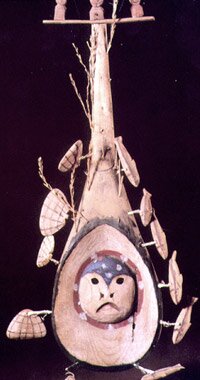
Shamans used their rattles to summon up the spirits |
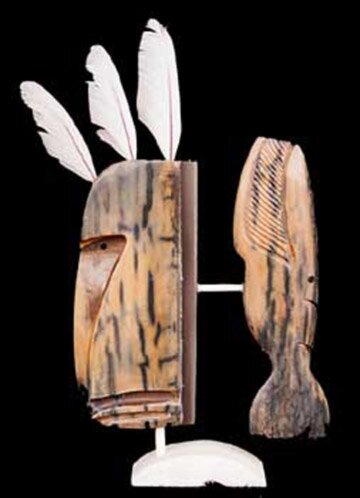
Shaman mask |
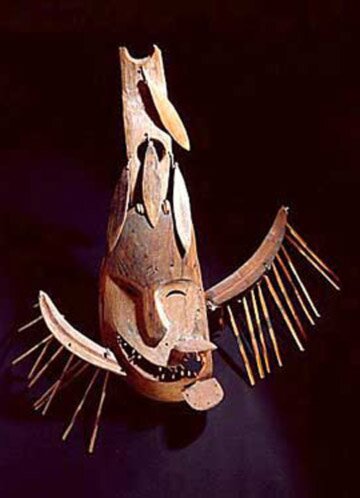
Shaman mask |
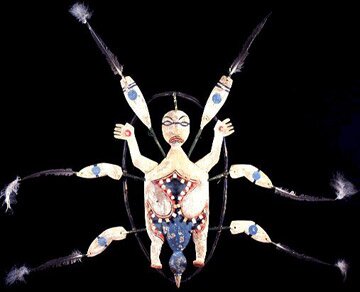
Shaman mask |
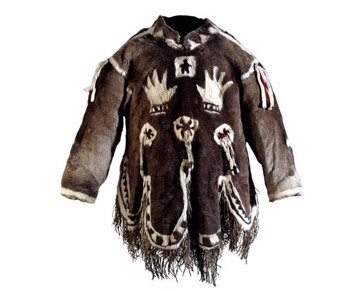
Shaman parka |
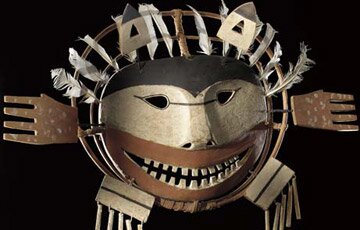
Spirit 'Amekak' lived in the ground |
The Spirits |
- Bad weather, illnesses, and a bad hunt were all blamed on displeased spirits.
- There were certain guidelines that the Inuit were supposed to follow to make the spirits happy.
- They had rituals for hunting and eating food to deal with the spirits that lived in the animals.
- They had to pay a deep respect to the spirit of the animals that they hunted, so that the spirit reappeared in another animal that could sacrifice its life again. If they did not pay their respects to the spirit, the spirit would reappear as a demon.
- Humans also had souls that could be lost or stolen (causes of illness and madness). The belief was that humans were made of three parts: a body, a name, and a soul. When a person died, it was only the body that died, the spirit and name could continue living in a new body. The names of dead relatives were given to babies, ensuring that the soul and name could continue living.
|
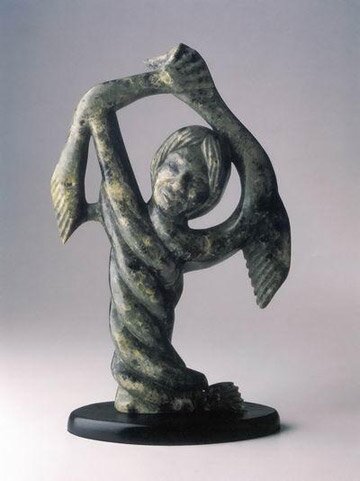
Carving of a sea spirit |
Rules of the Spirit World |
- Here are rules that needed to be followed in order to appease the spirits:
- Women were not allowed to sew caribou skins inside igloos on sea ice during the winter.
- The Inuit people did not eat sea mammal and land mammal meat at the same meal.
- A knife used for killing whales had to be wrapped in sealskin, not caribou skin.
- After killing a seal, melted snow had to be dripped into its mouth to quench the spirit's thirst.
- The Inuit saved the bladder of the hunted animals, because the belief was that the spirit was found inside.
|
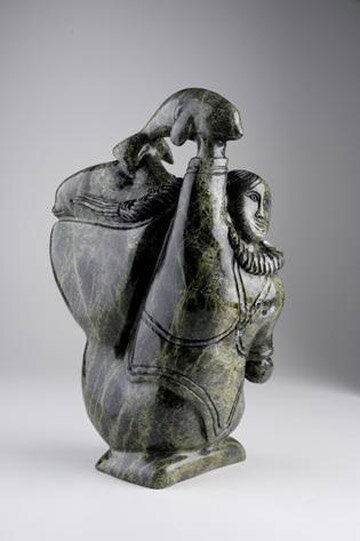
Carving of Sedna throwing a beluga whale |
Sedna, Goddess of the Sea |
- One of the most important spirits in Inuit culture was Sedna, the Goddess of the Sea.
- She lived at the bottom of the ocean and controlled the seal, whales and other sea animals.
- The belief was that if Inuit made her happy, she would continue to provide them with food.
|
|
| Ceremonies |
| The Inuit had different kinds of ceremonies for different aspects of life. |
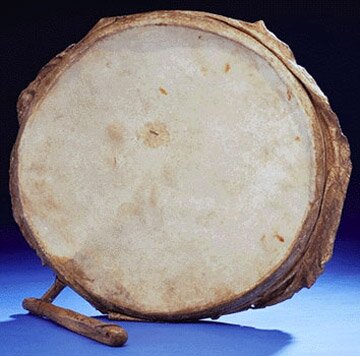
Inuit drum |
Music and Dancing |
- The main instrument of Inuit ceremonies and dances was the shallow, one-sided drum.
- Most drums were made from caribou skin, or walrus stomach or bladder stretched over a wooden hoop.
- Drum dances usually occurred inside large snowhouses (igloos) with up to 60 people.
- In song and dance they told stories of the spirits.
- Some dances were religious in nature, while others welcomed travelers or celebrated a successful hunt.
- Throat singing, performed by two women in competition, used different sounds made in their throats and chests. One woman would set a short rhythmic pattern; then the other woman would set her own pattern.
|
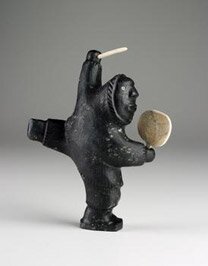
Carving of Inuit drum dancer |
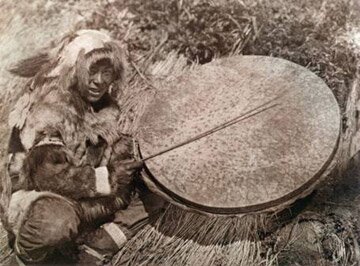
Drummer |
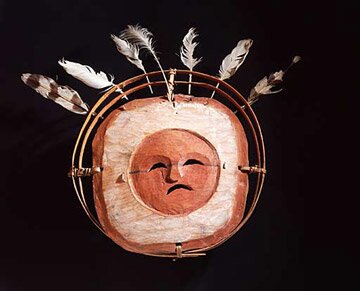
Shaman, spirit of moon mask |
Religious Ceremonies |
- Shamans (angakoks) performed many of their healing rituals in ceremonial houses called 'Kashims'.
- Kashims were sometimes partially buried in the ground, and only the Shaman knew where the entrance was.
|
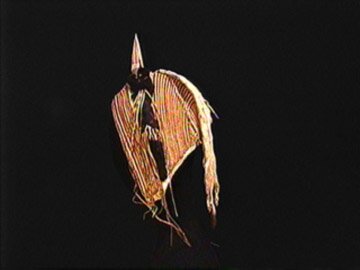
Dance hat |
Special Ceremonies |
- A ceremony called a 'Bladder Dance' was often held after a large hunt.
- The Inuit believed that the soul of the animal was found inside the bladder, so if the bladder was honoured and returned to the sea, then the animal's spirit would find a new body.
|
|
| Art |
- Inuit art played an important role in their culture.
- They used resources that were available to them, such as, parts of animals, stone, and driftwood.
|
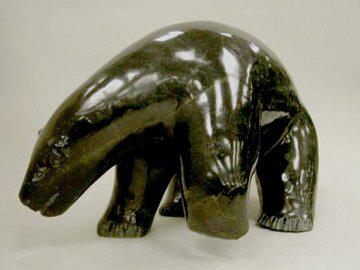
Polar Bear, soapstone |
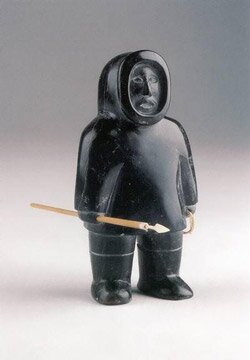
Inuit hunter, soapstone |
Carvings |
- Carvings were made out of stone, bone, and ivory (from walruses and whales).
- Most of their carvings were of Arctic animals, people, or spirits.
|
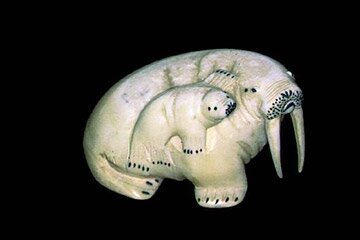
Ivory carving |
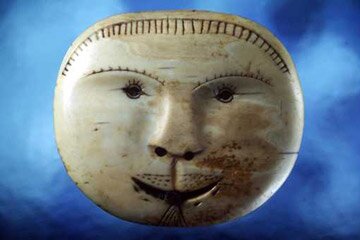
Ivory carving |
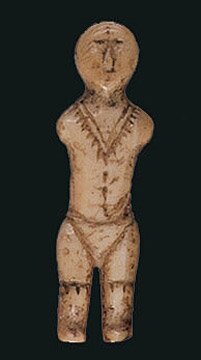
Ivory carving |
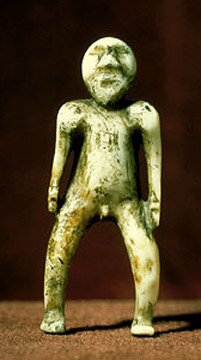
Walrus tusk carving |
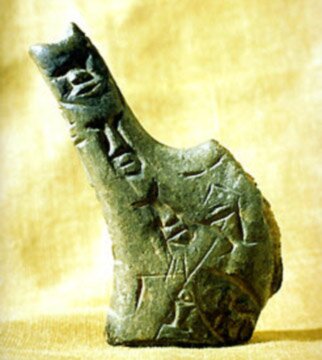
Caribou antler carving |
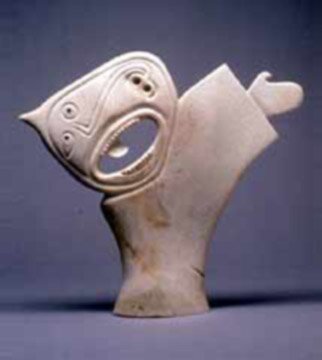
Whalebone carving |
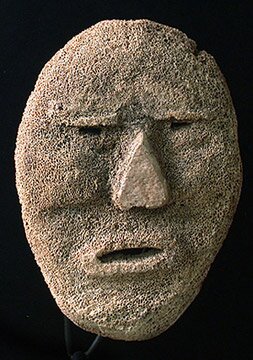
Whalebone mask |
Masks |
- Most masks were made out of driftwood or whalebone.
- Masks were used in ceremonial dances.
- Yup'ik masks represent encounters with the spirit world. They were made to show what spiritual leaders, like the Shamans, saw while they were in a trance.
|
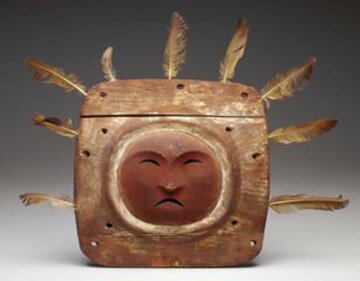
Driftwood mask |
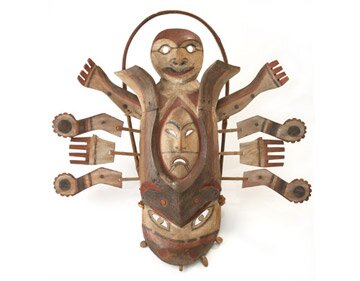
Yup'ik mask |
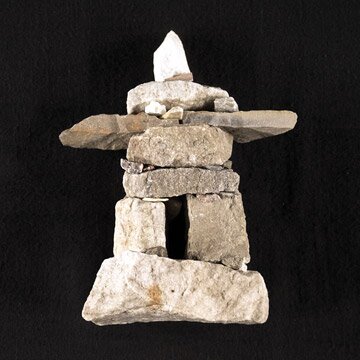
Inukshuk |
Inukshuks |
- Inukshuks were large rock Cairns made from balancing rocks that were heaved to the surface by the frozen earth (permafrost).
|
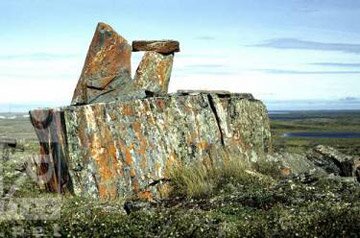
Inukshuk - Nunavut |
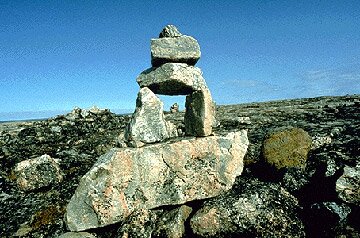
Inukshuk |
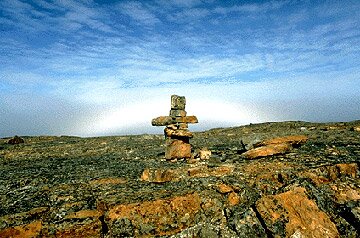
Inukshuk |
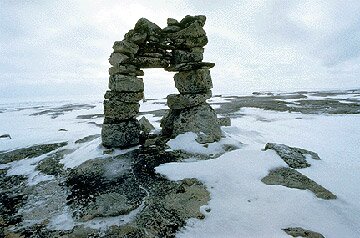
Inukshuk |
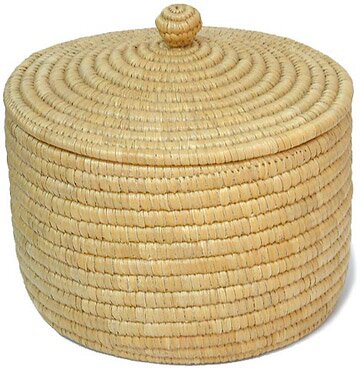
Basket |
Basketry |
- Baskets were made out of Arctic grasses.
|
|
| Clothing |
- Clothing of the Inuit people was mostly made out of animal skins and furs.
- They usually wore many layers of clothing as protection from the cold weather.
- Caribou skin was the most common choice for clothing, because it provided good insulation and was relatively light.
- Usually the Inuit wore clothing with two layers of caribou skin: an inner layer with the fur facing the skin, and an outer layer with the fur facing out.
- The Inuit people also made clothing from other animal skins, including dog, squirrel, marmot, fox, wolf, polar bear, bird skin, feathers, and sealskin.
- They sometimes used sea mammal intestines instead of hides, because they provided more resistance to water.
|
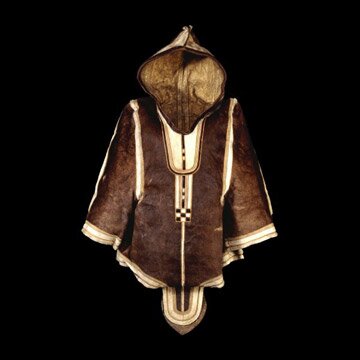
Caribou skin parka |
| Men and Women |
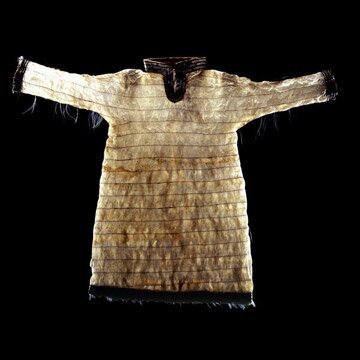
Kamleika (jacket), made from sea mammal gut |
- Men and women generally wore similar clothing to one another.
- In the winter they wore layers of boots, trousers, parkas with hoods, and mittens.
- The number of layers that they wore depended on the weather.
|
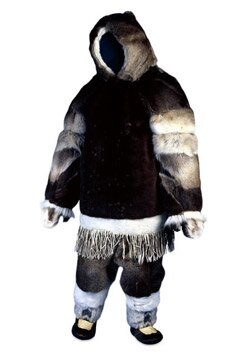
Man's winter clothing |
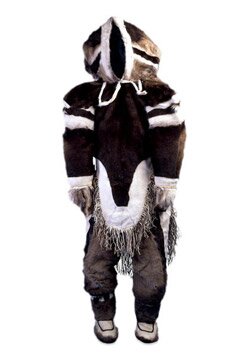
Woman's winter clothing |
| Winter Wear |
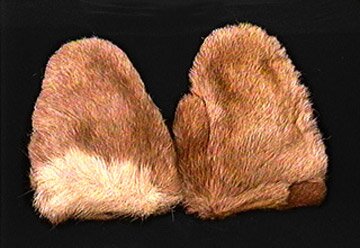
Fur mittens |
- Mittens were usually made out of caribou or sealskin, and were sometimes layered.
- Men and women both wore layered trousers to add extra protection against the cold.
- Clothing was tailored to fit each individual person, which helped keep cold air out at the neck, waist, and wrists.
- Snow goggles, made from caribou antlers, provided protection from the cold, but more importantly protection from snow blindness.
- Men and women both wore outer coats called 'parkas'.
|
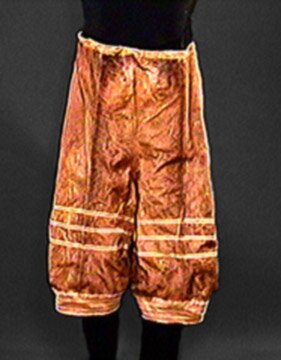
Man's outer trousers |
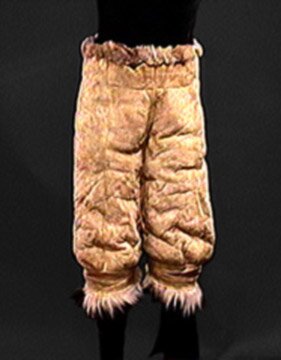
Man's inner trousers |
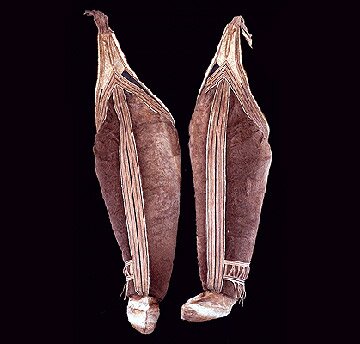
Woman's stockings |
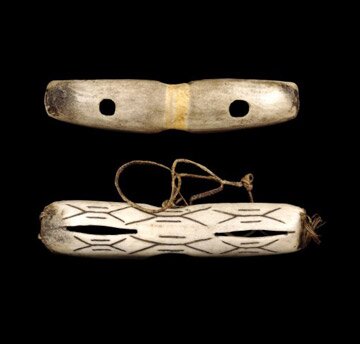
Snow goggles |
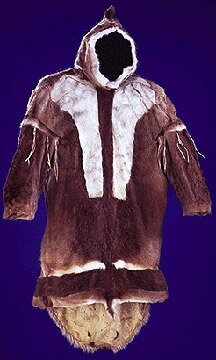
Man's parka |
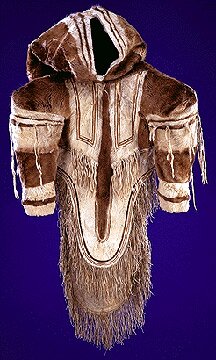
Woman's parka, with larger hood |
| Parkas |
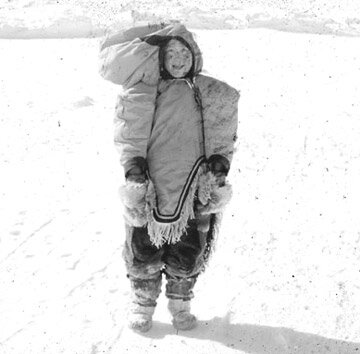
Woman wearing an 'amauti' |
- Most parkas were made out of caribou hair and skin, but they used other skins too.
- When parkas were made out of bird skin, the feathers were also used as added insulation.
- Women wore special large-hooded parkas called 'Amautis'.
- The large hood was used to carry babies and young children.
|
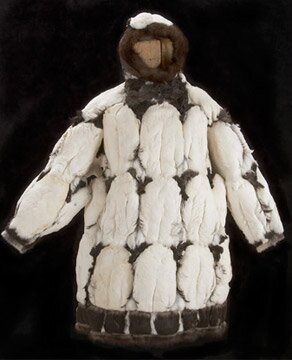
Birdskin parka |
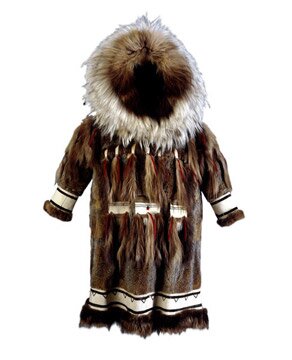
Ground squirrel fur parka |
| Children |
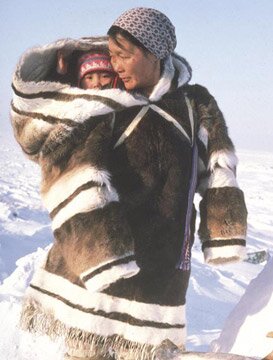
Woman carrying baby in her 'amauti' |
- Children's clothing was made of soft skin of younger animals.
- For the first couple of years, the children stay in the hood of their mother's amauti.
- When they are 2-3 years old they start wearing 'atajuqs' or combination suits.
- A combination suit is a piece of fur made into one suit with a hood, pants, mittens, and boots.
|
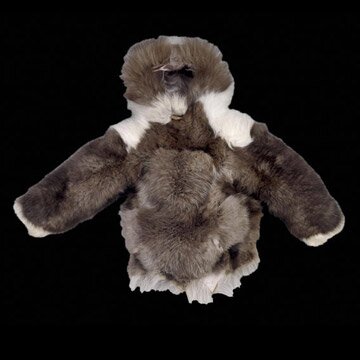
Child's fur coat |
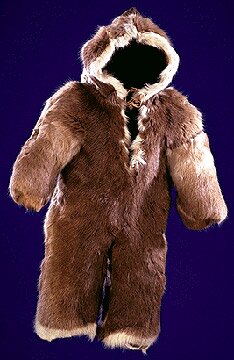
Child's combination suit |
| Footwear |
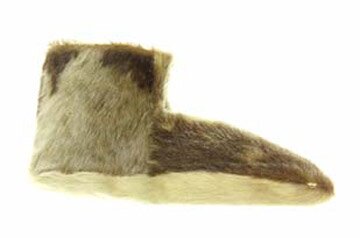
Fur slipper |
- During the winter, it was very important for the Inuit to keep their feet warm, so they wore up to four layers of footwear.
- Typically they wore three layers on their feet: a boot stocking, a sealskin boot (mukluk), and a fur slipper.
|
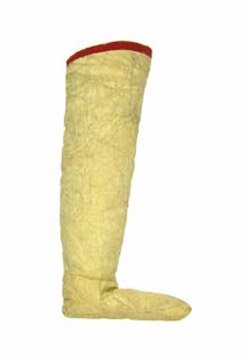
Boot stocking |
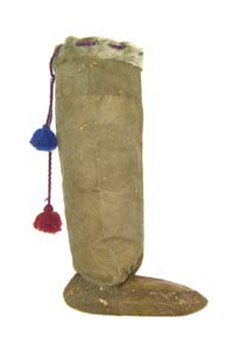
Sealskin boot |
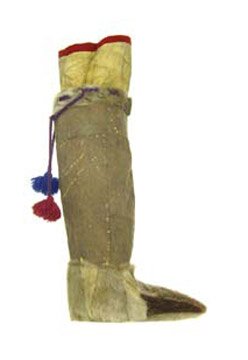
Three layers of footwear |
|
|











