| The Inuit |
|
|
| Name |
The people of the Canadian Arctic are known as the Inuit. They used to be called Eskimos, which came from a Native American word for 'eater of raw meat'. Now the Arctic people are officially known as the Inuit, which means 'the people', or singularly, Inuk, which means 'the person'. |
| Arrival |
The Inuit were the last native people to arrive in North America. All the good land to the south was already occupied by hostile Indians so they settled in the Arctic. Nobody else wanted it because it was one of the most extreme climates in the world. But the Inuit were masters at adapting to sustain their people over thousands of years. |
| Location |
The Inuit lived in an area comprising a large part of northern Earth, including Northern Canada, Alaska, Greenland, and Siberia.
|
| Languages |
The languages of the Inuit can be divided into many different languages and dialects. However, all of the Inuit languages come from one main language family: the Inuit-Aleut, also known as the Eskimaleut language family.
The languages groups can be grouped into an Eastern branch and a Western branch, which can then be further divided into individual languages and dialects of those languages.
Eastern Branch (Inuktitut languages):
- The Eastern Branch languages have three different names for the language.
- Inuktitut (in Canada)
- Inupiaq (in Alaska)
- Kalaallisut (in Greenland)
- There are three different names, but it is considered to be the same language.
- There are also many dialects from this language branch spoken in the three countries.
Western Branch (Yupik languages):
- Yupik is divided into three distinct languages.
- Central Alaskan Yupik
- Pacific Gulf Yupik (Alaska)
- Siberian Yupik (Canada and Alaska)
- Each of these three languages has several dialects as well.
The Inuktitut and Yupik languages are both quite hard to learn and speak, because they are very complex languages.
|
| Nations |
The Inuit have a distinct culture and appearance from other First Peoples groups in Canada, which really set them apart. Historically, the Canadian Inuit were divided into eight main groups: Labrador Inuit, Ungava or New Quebec Inuit, Baffin Island, Igloolik, Caribou, Netsilik, Copper and Western Arctic Inuit.
|
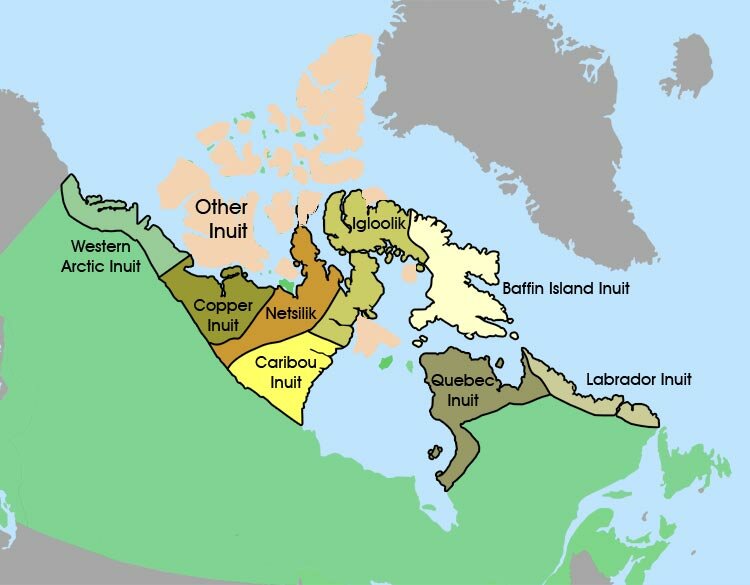
Map Source - The Canadian Encyclopedia |
| Labrador Inuit |
| Location |
Atlantic Coast of Labrador |
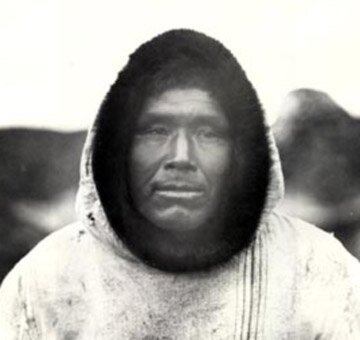
Labrador Inuit man |
|
| The Ungava or The New Quebec Inuit |
| Location |
Ungava Bay, on south shore of Hudson Strait and east coast of Hudson Bay |
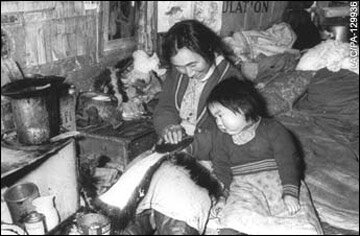
Ungava woman and child |
|
| Baffin Island Inuit |
| Location |
Baffin Island in Nunavut |
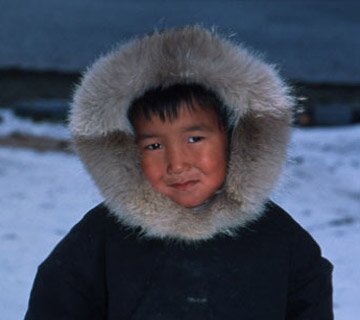
Boy from Baffin Island |
|
| Igloolik (or Iglulik) |
| Name |
The name "Igloolik" means "there is an igloo here" in Inuktitut. |
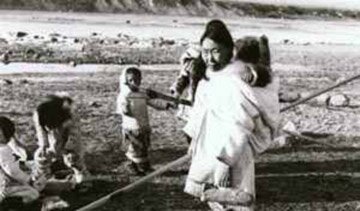
Igloolik family |
| Location |
Western Baffin Island and Melville Peninsula |
|
| Caribou Inuit |
| Name |
They were named Caribou since they almost completely rely on Caribou for food, shelter and clothing. |
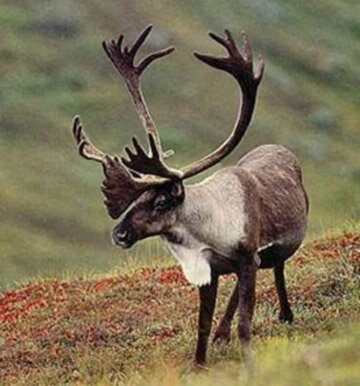
The Caribou have their name because
of their dependence on the animal |
| Location |
West of Hudson Bay |
|
| Netsilik |
| Name |
Their name means "people of the place where there is seal", |
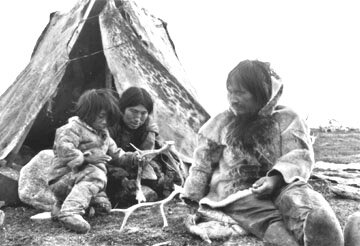
Netsilik family camp |
| Location |
Arctic coast of Canada, west of Hudson Bay |
|
| Copper Inuit |
| Name |
Their name comes from the fact that they use the copper deposits in their region extensively. |
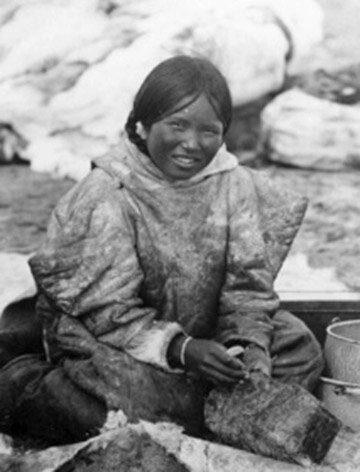
Copper Inuit girl |
| Location |
Banks and Victoria islands, and mainland region of central Arctic |
|
| Western Arctic Inuit |
| Name |
They were formerly known as the MacKenzie Inuit. |
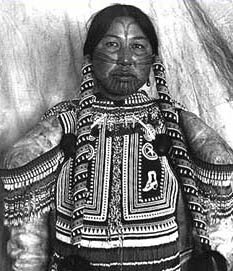 |
| Location |
MacKenzie River valley |
|
|
|
|
| Back to the top |
| Back to Canada's First Peoples Menu |











