| The Inuit |
|
|
The Inuit lived in an area comprising a large part of northern Earth, including Northern Canada.
Parts of the Yukon, NWT, Nunavut, Quebec and Labrador were settled by the first peoples of the Canadian Arctic. |
| Transportation |
- The Inuit had different methods of travel depending on the season.
- In the winter they traveled across the frozen Arctic either by foot or dog sled.
- During the summer they took advantage of the open water and traveled by boat.
|
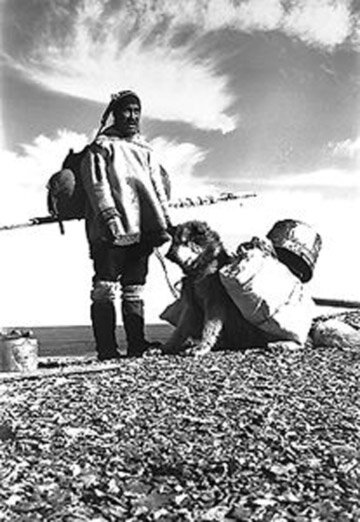
Pack Dog |
| Winter Travel |
- When the first Inuit arrived in North America, they brought dogs with them.
- The dogs helped with hunting. They were able to scare off bears and other threatening animals, and could also help locate seals' breathing holes.
- Dogs were also used as pack animals, like the Plains people used horses, and to pull sleds called 'unieks'.
- The Inuit people also attached spikes called 'crampons' to the bottom of their boots to get more grip when traveling on the ice.
|
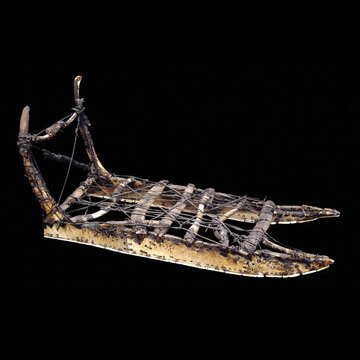
Walrus bone uniek (sled) |
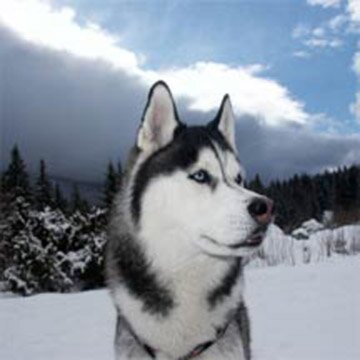
Inuit dog |
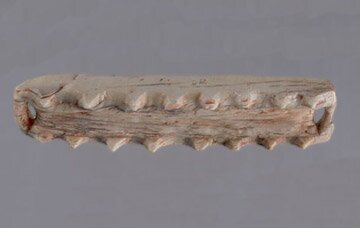
Crampon |
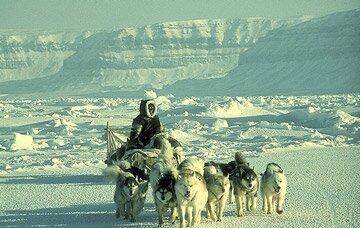
Dog sled team |
| Summer Travel |
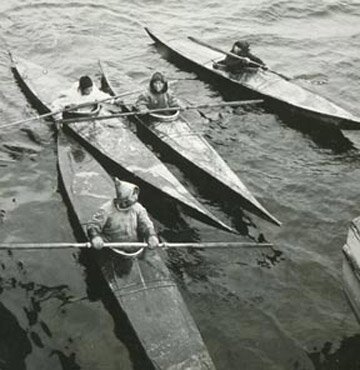
Hunters in kayaks |
- The Inuit people made two types of boats: the kayak and the umiak.
- Kayaks were small, lightweight boats mainly used for hunting.
- Kayaks were one-person wood frame boats covered with sealskin.
- They were built to be lightweight, and easy to paddle and maneuver in the water.
- Sealskin skirts were wrapped around the occupant's waist to prevent water from entering the boat.
- Umiaks were large, open boats mainly used for travel.
- Umiaks were open, wooden, skin-covered boats.
- They were larger than kayaks, 7-10 m long and 2.5 m wide, and could carry between 10 and 15 people.
- They were generally used to move from camp to camp, and to hunt larger sea mammals, like whales.
- Usually the women did the rowing, while the men steered the boat.
|
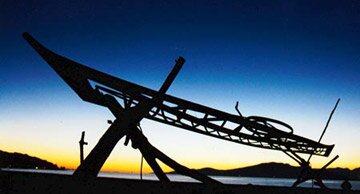
Wooden kayak frame |
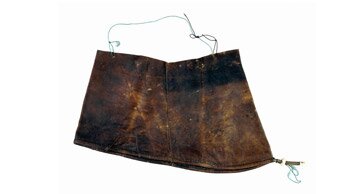
Sealskin spray skirt |
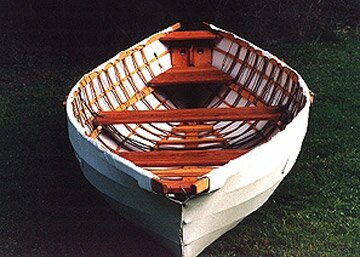
Umiak |
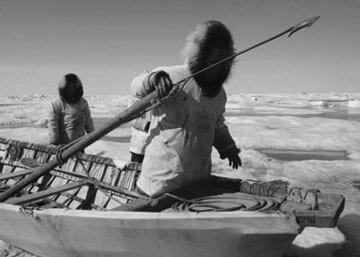
Hunters in an umiak |
|
| Seasonal Migration / Adaptation |
- The Inuit lived nomadic lifestyles, so they did not stay in one place for an extended period of time.
- Since hunting and fishing was their main source of food, they were forced to move around, following the seasonal migration patterns of area animals.
- Caribou, muskoxen, and seals all gathered in large groups for their seasonal migrations, and the Inuit followed them closely.
- During the winter the Inuit mostly lived in coastal areas where they could hunt seals.
- Temporary winter camps or villages had up to 100 people living there.
- They used sleds pulled by dogs to travel great distances on the ice, and lived in temporary snowhouses (igloos).
- During the spring and summer months, the Inuit started moving inland in smaller groups, usually fewer than a dozen people. There, they spent more time fishing and hunting caribou.
- In the summer the lived in animal skin tents and traveled by foot and boat.
|
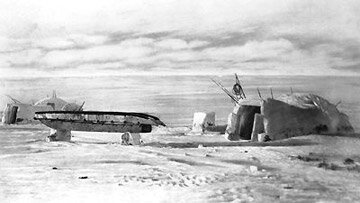
Winter camp with igloo |
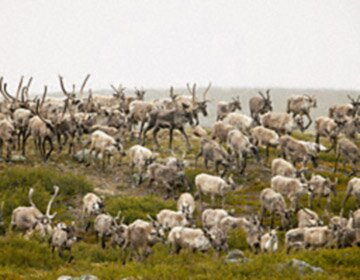
Caribou migration |
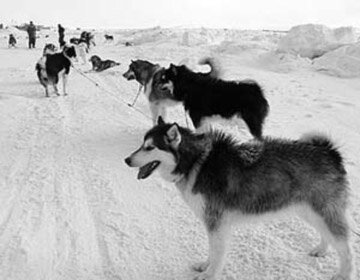
Inuit dogs |
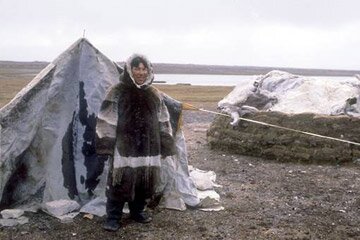
Summer hunting camp |
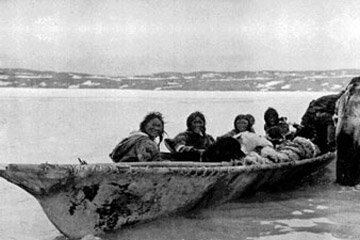
Large boat (umiak) |
|
|
|
|
| Back to the top |
| Back to Canada's First Peoples Menu |
|
|











