| Family |
- Families were important, and extended families shared living quarters.
- The Elders held the wisdom and were greatly respected.
- The eldest female was the master of the longhouse.
- The elder grandfathers were the storytellers.
- The females were symbols of fertility, and raised the children, and tended to the fields.
- The males were the hunters and the protectors of the family and the villages. They went to war, were away during the winter hunting, and did the hard-labour jobs like building the villages and clearing the forest lots.
- Children helped out in the fields and with everyday duties like cooking, sewing and maintaining the longhouse.
|
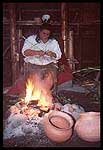
Sitting in the Longhouse |
|
| Social Structure / Leadership |
- Each village belonged to a certain tribe or clan, and a collection of villages made up a Nation.
- Each village had a sachem, or chief who enforced laws and guided the village in times of trouble.
- Chiefs were hereditary, determined through the bloodline of the mother.
- There was also a warrior chief who gained his position through valour, wealth and courage.
- The more material goods someone could afford to give away, the more their status rose.
- This reinforced the community, because then the person needed to rely more on other people’s kindness and less on himself.
- Individual liberty was strong; a person’s wrongdoings brought misfortunes and illness. Public confession was the only remedy.
- When there were conflicts between nations or tribes, village councils tried to settle with the dead man’s relatives to get equal restitution and restore peace.
- Male members of the victim’s longhouse were honor bound to kill the murderer.
|
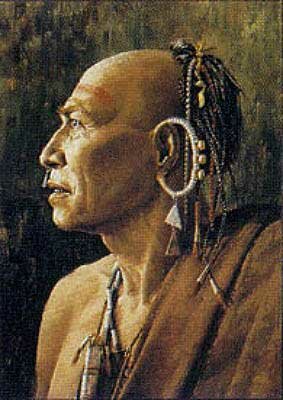
Mohawk War Chief |
|
|











