| Transportation |
| The Eastern Woodland Farmers traveled mainly by foot or canoe |
| Showshoes |
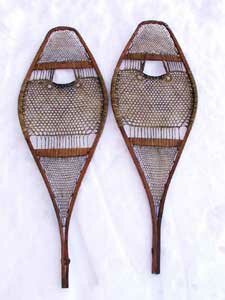
Huron Snowshoes |
- Snowshoes worn during winter allowed clan members to walk swiftly across the snow without sinking.
- They were made from tree boughs bent into frames and laced with animal sinew.
- These snow shoes made it easy to walk on top of snow that could be two or three feet deep. This way hunters could easily catch up to a moose or deer that was floundering helplessly in the deep snow.
|
| Canoes |
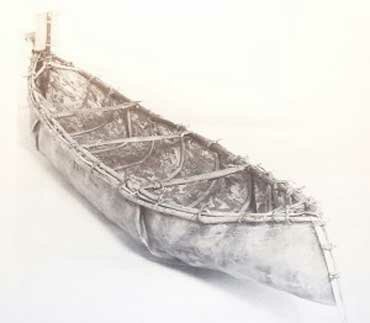
Elm-Bark Canoe |
- The canoe were made from elm bark, a common wood, or birch bark, which was lighter and faster.
- Size of canoe varied between 3 m and 8 m.
- Bark stripped in late spring was soaked in steaming water.
- The bendable bark was then placed over a frame, sewn together using a large bone needle and basswood or dogbane cord (thin strips of inner cedar bark or black spruce roots) as thread.
- Then the canoe was painted with pine gum, making it watertight.
|
|
| Seasonal Migration / Adaptation |
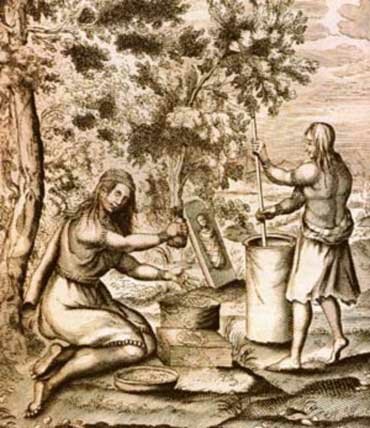
Iroquois Women Working |
- Clans built villages lasting up to 30 years.
- When soil of nearby farming field degraded, villages moved locations.
- While women stayed in the village year round, men went hunting and trapping during the winters.
|
|











