| Transportation |
| The Plateau People used many forms of transportation as they were semi-nomadic people. |
| Canoes |
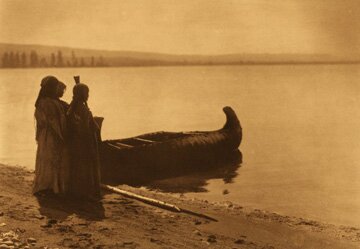
Ktunaxa girls with canoe |
- The Plateau people had access to many natural waterways. To take advantage of all the rivers and lakes in the area, the people built canoes for traveling.
- They built wooden dugout canoes called 'sturgeon-nosed' or 'ram-shaped' canoes.
- The shape was designed to keep water out of the canoe in rapids and large bodies of water, like lakes.
- These dugout canoes were made of either red cedar or cottonwood trees, or bark from pine or birch.
- While the lacing for the canoe was made out of deer, caribou, or moose hide.
- Canoes were mostly used on lakes. However, with the sturgeon-nosed design, the people were also able to travel on some of the more turbulent rivers in the area.
|
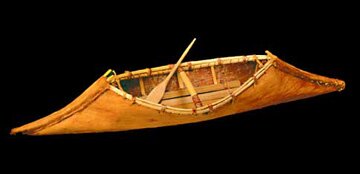
Ktunaxa sturgeon-nosed canoe |
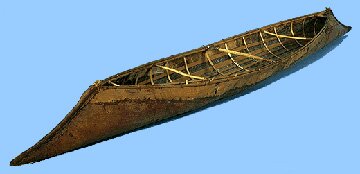
Model of sturgeon-nosed canoe |
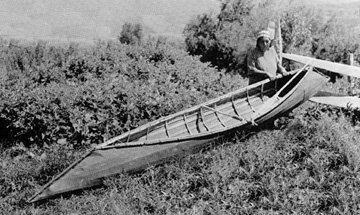
Ktunaxa dugout canoe |
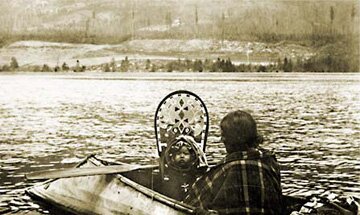
Mother and baby in sturgeon-nosed canoe |
| Horses |
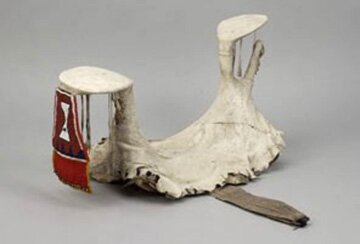
Ktunaxa saddle |
- In the 1730s horses arrived in the Canadian Plateau region from the south, which greatly improved travel.
- Horses were used as pack animals for carrying people
- The Ktunaxa people were the first to use horses.
- Ktunaxa saddles were made of wood covered with rawhide and sewn with sinew.
|
| Dogs |
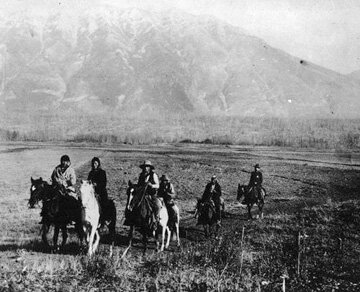
Ktunaxa party on horses |
- Dogs were also used as pack animals, and for hunting deer.
|
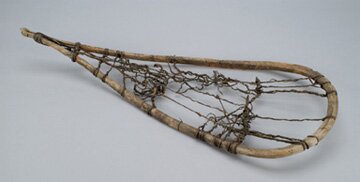
Nlaka'pamux showshoes |
| Winter Travel |
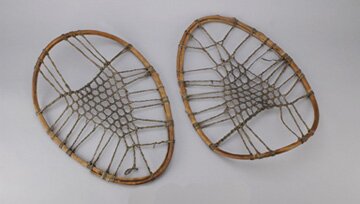
Nlaka'pamux snowshoes |
- In winter, the Plateau people used snowshoes to travel through the deep snow.
- The rounder, 'bear paw' snowshoes were used to carry heavier loads.
|
|
| Seasonal Migration / Adaptation |
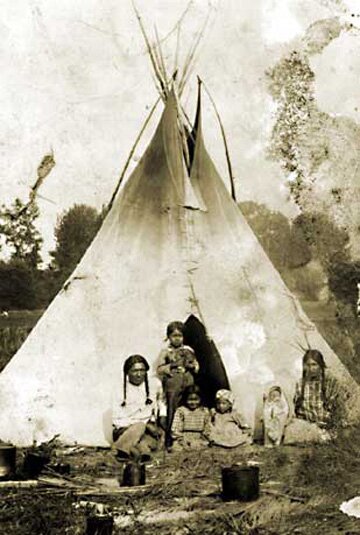
Ktunaxa family in front of tipi |
- The people of the Plateau region were semi-nomadic.
- Since hunting and fishing was their main source of food, they had to have a lifestyle that was favorable to moving regularly.
- Even though food was normally abundant, there were times when the salmon did not reach as far inland or there were fewer animals to hunt, so the people were forced to travel greater distances.
- Families traveled mostly during the spring, summer, and fall, so they needed shelters that were easy to take down and set up.
- Winters were spent in larger, more permanent villages, where people lived in underground shelters called pit houses.
|
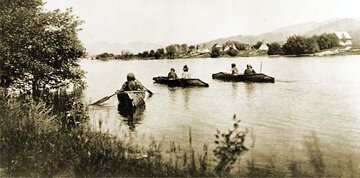
Plateau people traveling by canoe |
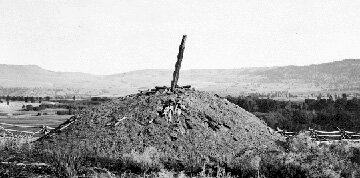
Winter pit house |
|











