| The Buffalo Hunt |
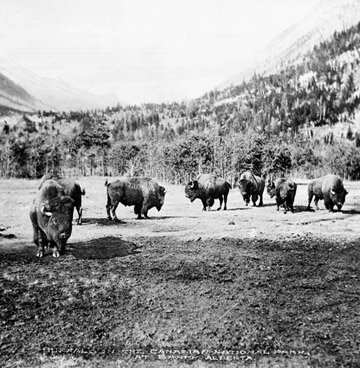
Buffalo herds |
- The buffalo hunt played an integral part in the development of the Métis Nation.
- Buffalo hunting provided the Métis with a livelihood, and helped sustain their way of life.
- Annual Buffalo Hunt
- They usually organized two big hunts every year, one in the spring and one in the fall.
- They traveled in large groups or ‘caravans’, sometimes with over 1,000 people and 1,000 carts for a single hunting expedition.
- The Métis caravans followed the buffalo for long distances, usually hundreds of miles, until they reached buffalo grazing areas.
- It was at these grazing areas where the buffalo were most easily killed.
- Men, women and children all went along on the hunts, because they needed as many people as possible to transport all of the buffalo hides and meat back home.
- The annual buffalo hunt became an important social gathering. It was an opportunity for extended families to see each other once or twice a year and get caught up.
|
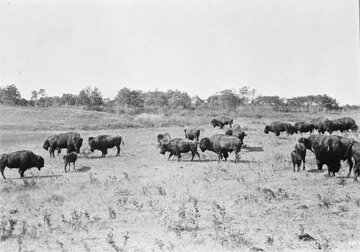
Buffalo herds |
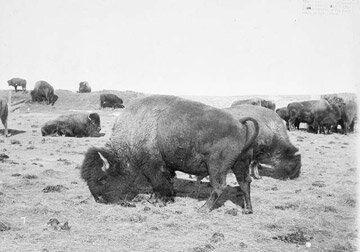
Buffalo grazing |
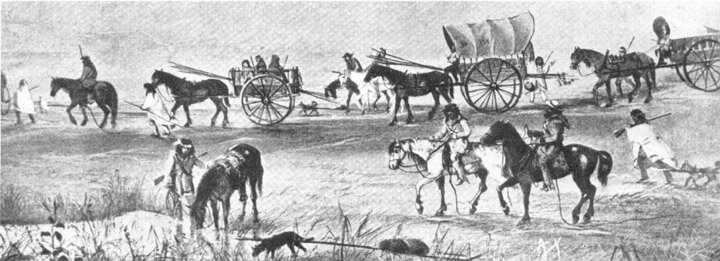
Buffalo hunting caravan |
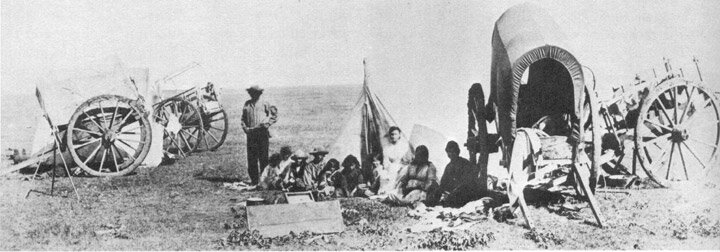
Buffalo hunting camp |
| Horses |
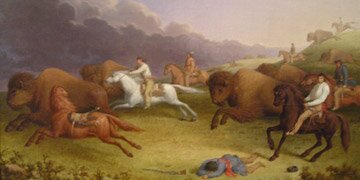
Métis hunting buffalo on horseback, Paul Kane |
- The introduction of the horse on the Plains, greatly changed the lifestyle of the Métis.
- Horses allowed the Métis to:
- Travel a greater distance (during the hunt)
- Hunt buffalo in a wider area (cover more ground)
- Kill more buffalo
- Chase and shoot buffalo from the horse (which was easier)
- Use Red River Carts (pulled by horses)
- Hunt without the need for Buffalo Jumps (running buffalo off cliffs to kill them)
|
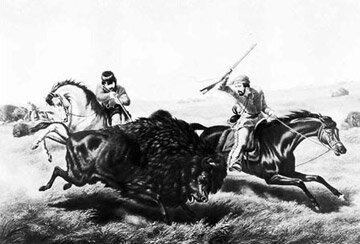
Métis hunters, Currier and Ives |
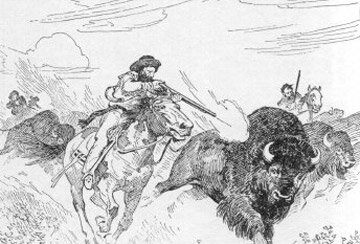
Métis buffalo hunt, sketch by C.W.Jeffreys |
| Métis buffalo hunting laws |
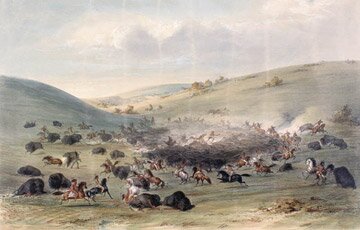
Buffalo hunt, George Catlin |
- The Métis buffalo hunts were well organized, and were executed with military precision.
- There were recognized 'Laws of the Prairies', relating to the buffalo hunt, that everyone had to follow.
- An elected 'buffalo hunt council' was in charge of enforcing those rules and organizing the hunt.
|
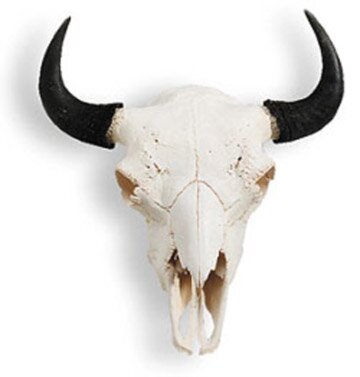
Buffalo skull |
Uses for the buffalo |
- During a single buffalo hunt, Métis hunters could accumulate over a million pounds of meat and hide. Women were responsible for butchering the buffalo, and loading the carts with the meat and furs.
- The buffalo meat that was brought back fed the Métis, fur traders, and white colonists in the area.
- All parts of the buffalo were used:
- Rawhide: containers, shields, buckets, moccasins, ropes, saddles, blankets, snowshoes
- Buckskin: cradles, moccasins, robes, shirts, leggings, dresses, bags, tipis
- Hair: headdresses, ornaments, moccasins, stuffing, amulets
- Skull: rituals
- Horns: arrows, spoons, ladles
- Bones: tools, pipes, knives, arrowheads, shovels, splints, clubs
- Meat: pemmican, jerky, soup
- Fat: soap, cooking, medicines
|
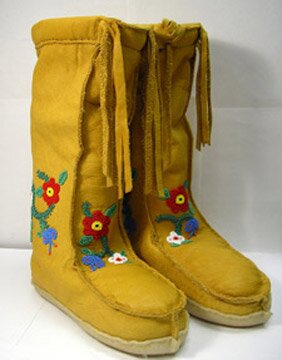
Buffalo skin mukluks |
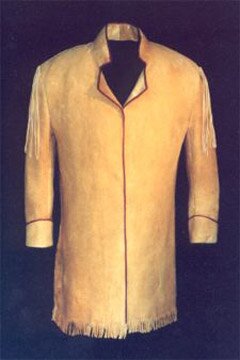
Brain tanned coat |
| Decline of the buffalo |
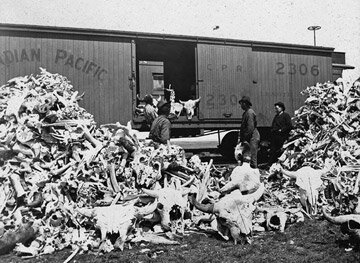
Piles of buffalo bones |
- With the decline and disappearance of the buffalo from the Plains, the Métis were almost destroyed.
|
|
|











