| The Métis Environment |
- Métis communities were established along the major fur trade routes, mostly near the important freighting waterways.
- The Métis lived in:
- Ontario
- Manitoba
- Saskatchewan
- Alberta
- British Columbia
- Northwest Territories
- The first Métis communities appeared in Ontario, particularly around the Great Lakes, and Eastern Canada.
- As the fur trade moved west, so did the French-Canadian fur traders. Métis settlements were located as far west as British Columbia, and as far north as the Mackenzie River in the Northwest Territories.
|
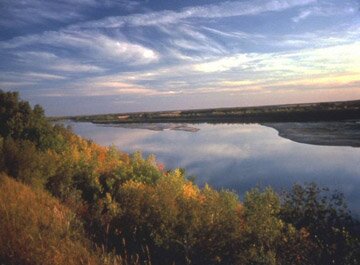
Saskatchewan River Basin |
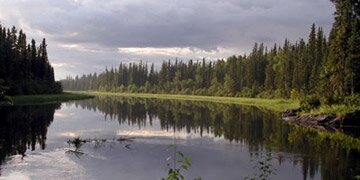
Grass River, Manitoba |
Water |
- Rivers were important for transportation during the fur trade.
- The French-Canadian voyageurs who traveled along the rivers, set up settlements, got married and had children, giving rise to new Métis communities.
- The Hayes River in Manitoba was used a principle fur trade route.
- Lakes were also used as important routes for the fur trade. Therefore, many Métis communities were established near the Great Lakes, and many Western Canadian lakes.
|
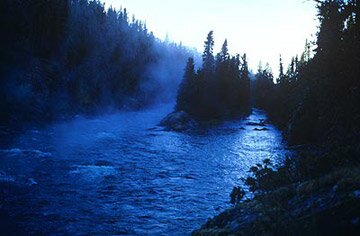
Hayes River, Manitoba |
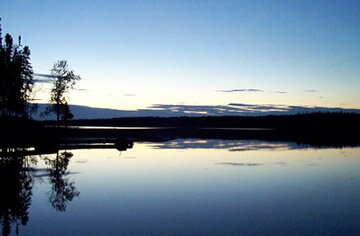
Setting Lake, Manitoba |
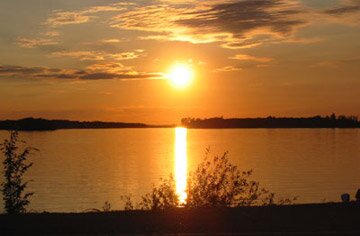
Killarney Lake, Manitoba |

Pelican Lake, Manitoba |
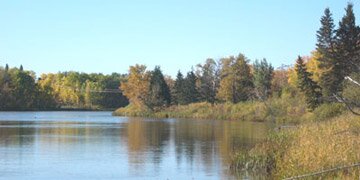
Red River, Manitoba |
The Red River |
- The Red River in Manitoba was used as a principle route during the western fur trade. Therefore, it played a critical role in the establishment of the Métis Nation.
- Many French-Canadian voyageurs made camp along the banks of the Red River. It was there that many voyageurs fell in love with local Native women and had children: the Métis.
- Winters were cold and deep snow fell in the Red River area.
- Métis communities along the Red River became known as the ‘Red River Settlement’.
|
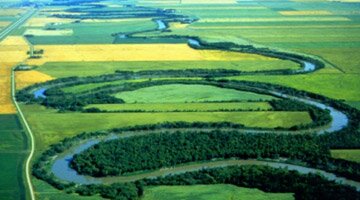
Aerial Red River |
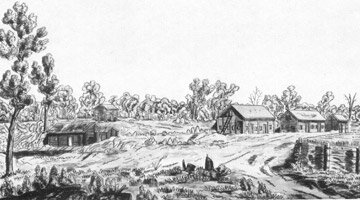
Red River Settlement |
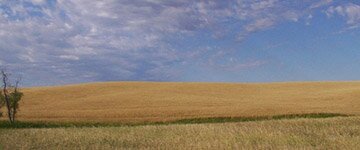
Canadian Prairies |
Canadian Prairies |
- Most Métis communities were located in two Canadian Prairie Provinces: Manitoba and Saskatchewan.
- Southern portions of Manitoba and Saskatchewan were completely flat, but rich soil made the area conducive to farming.
- The Prairies were known as ‘Big Sky’ country, because of the flat landscape and appearance of an endless horizon.
|
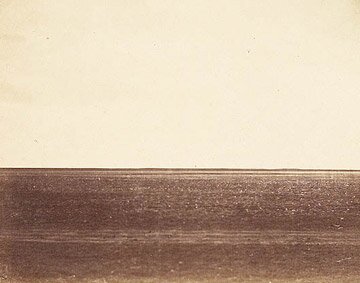
Prairies, looking from the band of the Red River |
Prairie sunset |
Prairie sunset |
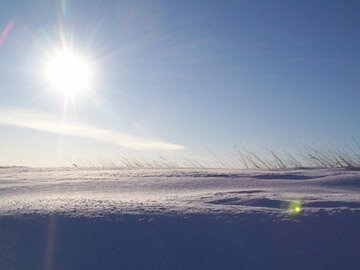
Winter on the prairies |
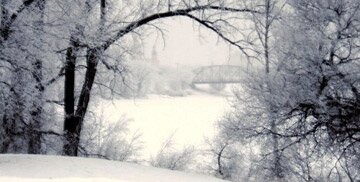
Red River Winter |
Winters |
- Winters in the Canadian Prairies were harsh. The temperatures were regularly below freezing and deep snow blanketed the area.
- The Métis were forced to adapt to the shorter growing season and the cold weather during the winter months.
|
|
| Settlements and Housing |
- On buffalo hunts and trade expeditions, the Métis camped in tipis similar to the Plains tipis.
- The Métis also had canvas tents that were brought over by the Europeans.
- For the rest of the year, the Métis lived in permanent settlements, like the one established along the Red River in Manitoba.
- They lived in Red River lots: farm houses that were built along the Red River.
- When they were not hunting, they spent their time gardening and farming.
- Most Métis families lived and farmed along the Red and the Assiniboine Rivers in Manitoba.
|
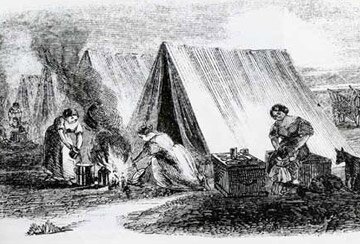
Métis camp, women cooking, Harper's Bazaar (1859) |
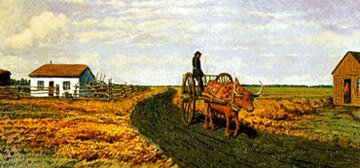
Red River Colony |
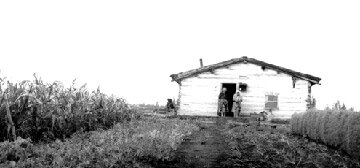
Métis farm house |
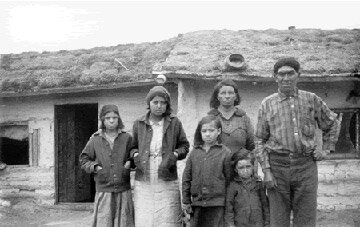
Métis family in front of home |
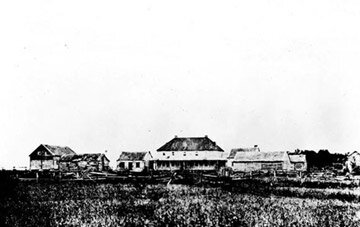
Red River Settlement |
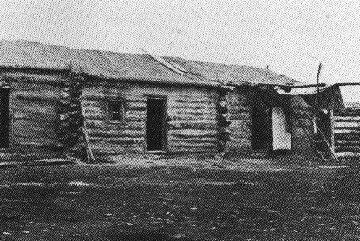
Métis log house |
Métis Log Houses |
- Log houses were the most common Métis dwellings.
- They were basic square log cabins, made out of rounded logs with notched ends. The roofs were often flat.
- Mud and hay were put on the outside of the house for added insulation.
- Log houses in a village were usually built in a circle, with the largest building in the centre.
- The largest building in the village was generally used for dances and town meetings.
- Small Métis settlements, or villages, had around 40-50 log cabins.
|
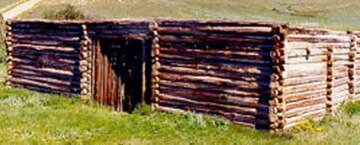
Métis log house frame |
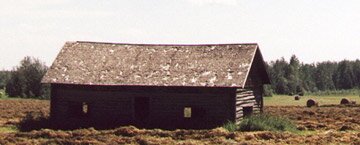
Heart River Community Hall |
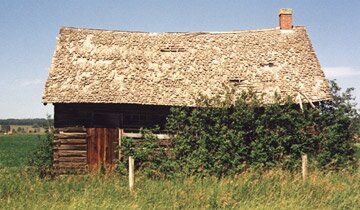
Heart River, Métis settlement |
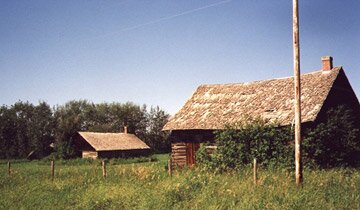
Heart River settlement |
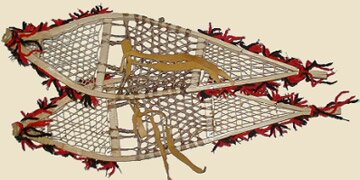
Snowshoes
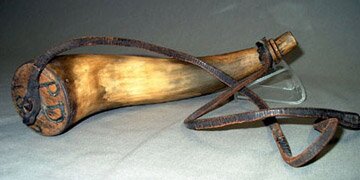
Powder horn |
Inside the houses |
- Furniture
- The furniture and utensils in a typical Métis house were a mixture of both Native and European culture.
- Most of their furniture was made out of wood: wooden trunks, round tables, beds (covered with buffalo furs)
- Floors
- Some log cabins had wooden floors, while some had dirt floors. Water was added to the floor on occasion to keep the dirt floors packed down.
- Walls
- Buffalo hair and clay were added to the inside walls for added insulation. Typical Métis families decorated their walls with: guns, powder horns, bullet bags, animal skins, snowshoes.
- The Métis either used mud ovens or iron stoves for cooking.
- Utensils were carved from wood, or acquired through trade.
|
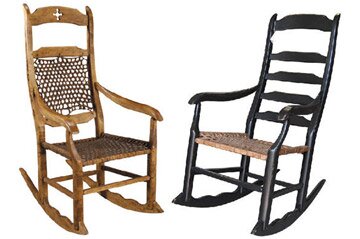
Métis style rocking chairs |
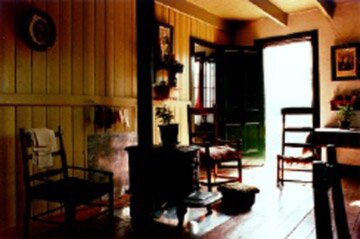
Iron stove, inside Louis Riel's house |
|
|











