| Religion |
- In Eastern Algonquian religion they believed that there was a spiritual world that interacted constantly with the physical world.
- There was a belief in a primary spirit or animating force that encompassed all existence. Algonquians called this animating spirit 'Kitchie Manitou' or the 'Great Spirit'.
- According to the Algonquians, the 'Kitchie Manitou' was present in all living and non-living things, for example in everything from people and animals, to plants and water, to the Sun and the moon, and even sickness.
- The only people who could communicate with and control the spirits were the 'Shamans' or 'Medicine Men'.
- Shamans were the most important spiritual leaders in Woodlands Algonquian culture, and were idolized for their ability to communicate with the spirit world and ward off evil spirits. They could do this by performing curing rituals in which they used magical rites to force evil spirits from the bodies of the sick.
|
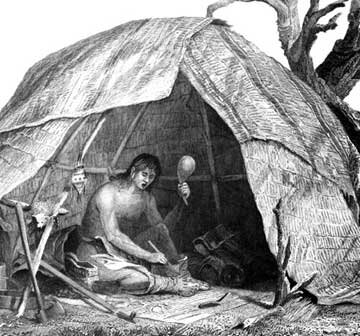
Algonquian Shaman |
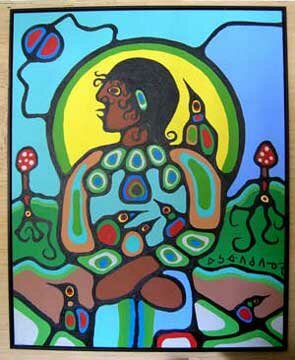
"Shaman Envelopes Soma" by Norval Morrisseau |
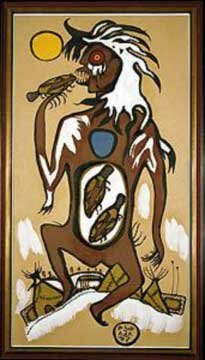
A Windigo painted by Norval Morrisseau |
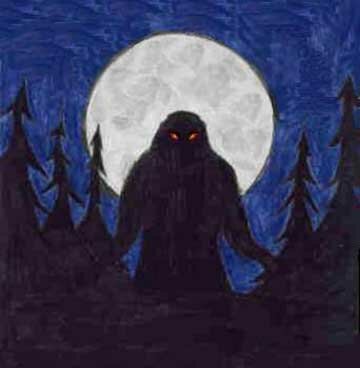
Windigo Spirit |
Evil Spirit 'Windigo' |
- The 'Windigo' was an evil spirit from Algonquian legends.
- According to legend, people, who were lost in the woods and starving, would resort to cannibalism and become Windigoes. These people would return home from the forest only to become violent and anti-social.
- They would gradually be overcome by the urge to consume human flesh, giving more power to the Windigoes.
- The only way to destroy the evil spirit was to kill the host and burn their body to ashes.
- According to different versions of the legend, there are several ways to get inhabited by a Windigo, including being bitten by one, a shaman's curse, or dreaming of the Windigo.
|
|
| Ceremonies |
- The Eastern Woodlands Algonquian had feasts and ceremonies to celebrate special occasions throughout the year.
- They marked the changing seasons with a ceremony and feast and held similar rituals to mark the three main phases of life: birth, puberty, and death.
- Face paint was also an important part of these ceremonies, used to express feelings.
- Red = life
- Black = death or eternal grief
- Purple = royalty or to mark special occasions
- In a similar fashion masks were used to cure diseases and scare off evil spirits during these ceremonies.
- 'Wampum' or small beads made from shells were also important parts of religious and kinship ceremonies. The beads were stringed together to make strings, belts and sashes.
|
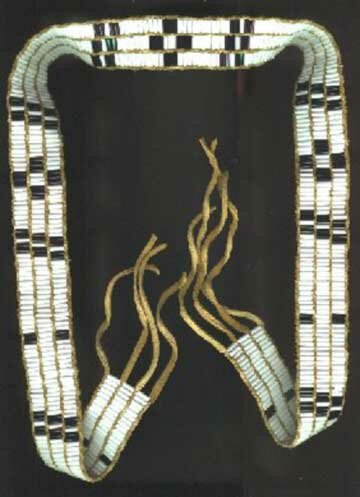
Wampum sash |
|
|
| Art |
- The Eastern Woodlands Algonquians decorated clothing and art with elaborate beadwork and quills.
- They also made 'Dreamcatchers', which were decorated nets used to catch the bad dreams and let the good ones pass through.
|
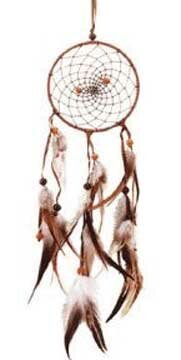
Dreamcatcher |
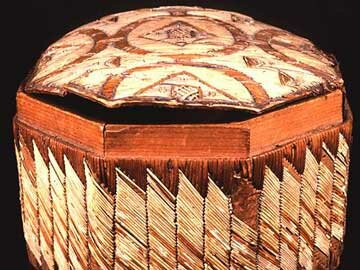
Mi'kmaq Quill Box |
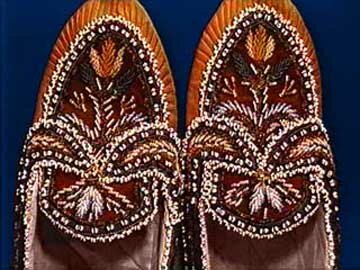
Mi'kmaq Moccasins |
|
| Modern art |
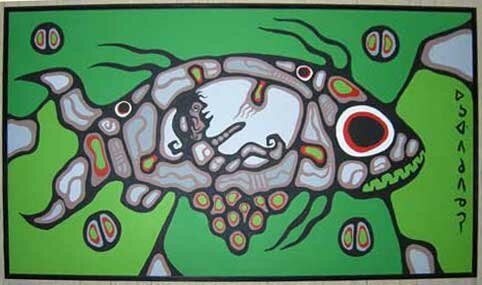
"Legend of the Fish" by Morrisseau |
Canada's most famous Indian painter is Norval Morrisseau who is from this group.
Click here to find out more information on
Morrisseau and his art. |
|
| Clothing |
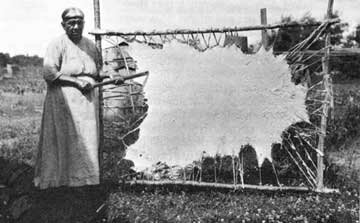
Woman with stretched hide |
- Clothing of the Eastern Woodlands Algonquians was made mostly out of mammal, bird and fish skins, either pelts (animal skins with the fur still on it), or the hide (skins with no fur).
- The skins were tanned through a smoking process, and then carefully stretched to produce softer, more usable leather.
- This leather was sewn to make robes, shirts, leggings, dresses, skirts, breechcloths (loincloths), and moccasins.
- Deerskin was the most popular choice for clothing, because of the abundant deer population in the area, however, they commonly used other skins like raccoon or elk skin.
|
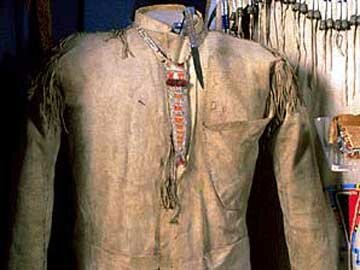
Animal skin coat |
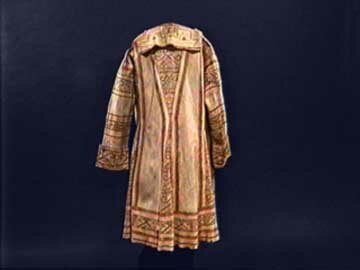
Naskapi (caribou) robe |
| Men's Clothing |
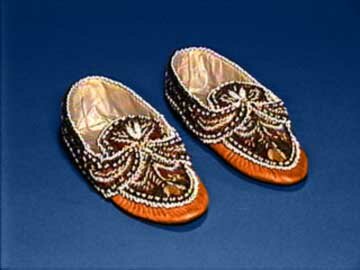
Mi'kmaq moccasins |
- Typical clothing for Eastern Woodlands men were robes, leggings, moccasins, and breechclothes.
- For cold weather and special occasions, they wore mittens, special coats and special hats.
|
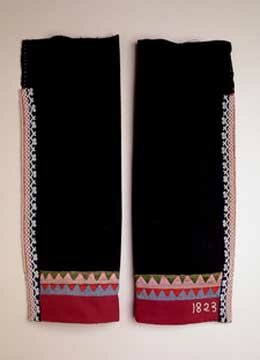
Leggings |
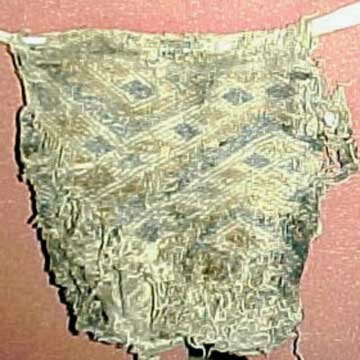
Breechcloth |
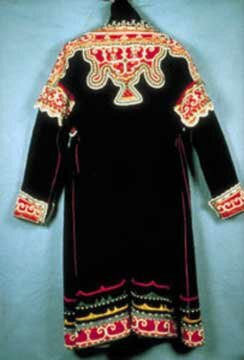
Mi'kmaq Chief's coat |
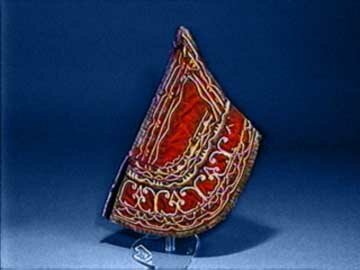
Mi'kmaq peaked hat |
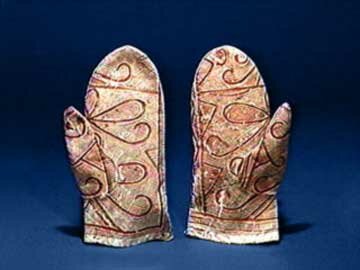
Naskapi mittens |
| Women's Clothing |
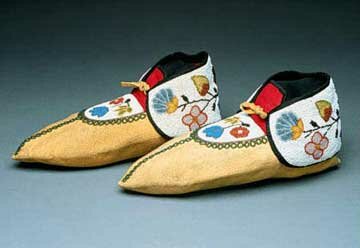
Chippewa moccasins |
- A typical woman would have worn a robe under her arms and tied around her waist, leggings, a skirt (tied at the waist), and moccasins.
|
| Decoration |
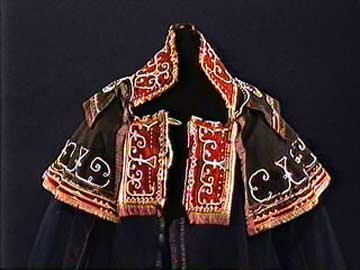
Decorated Mi'kmaq coat |
- Women made all the clothing for themselves and their family. They decorated clothing with feathers, shells, stones, paint, and porcupine-quill embroidery.
- Another form of decoration was 'wampum', small beads made from white and purple shells, used to make strings, belts, sashes, and jewelry. The wampum beads were cut from the central parts of large shells or clams.
- 'Wampum Belts' were commonly made with pictures to keep tribal records, and to communicate with other groups when they went to visit. The belts also played roles in certain religious ceremonies, and were also eventually used as a form of money during the fur trade.
|
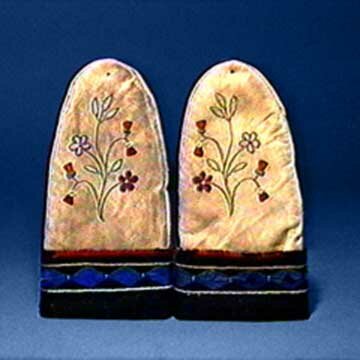
Montagnais mittens |
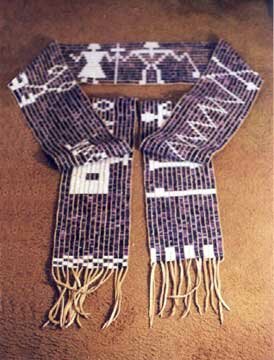
Wampum belt |
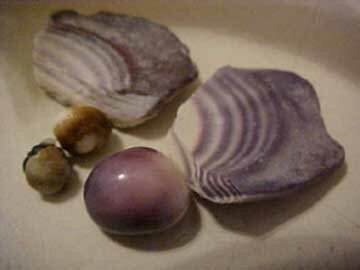
Wampum shells |
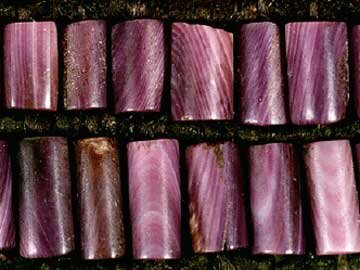
Wampum beads |
|
|











