| Transportation |
| The Eastern Woodland Hunters traveled a different way in different seasons |
| Summer - Water |
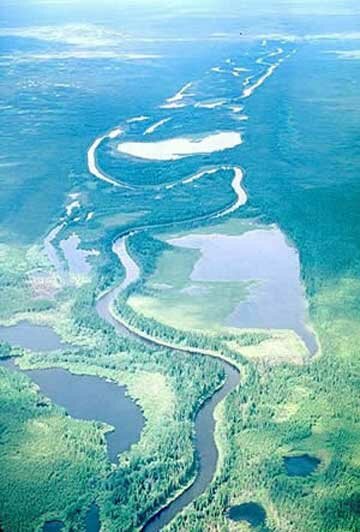
St. Lawrence Lowlands |
- With all the natural waterways in the Eastern Woodlands, the people living there became skilled paddlers.
- Between the Great Lakes, St. Lawrence River, Atlantic Ocean, and other rivers and lakes, people were able to travel great distances by boat in order to fish or hunt.
- The slender birch bark canoe were a main source of transportation during the summer. Birch bark was a functional material to use because it was strong, but light, making the canoe easier to paddle and portage. Birch trees were also particularly abundant in the area.
- Birch bark strips were sewn together and attached to the wooden frame using spruce root as a lace. The seams were sealed with spruce gum.
- The canoes were easy to repair. If there was a hole, a new piece of bark could be sewn in and sealed with spruce gum.
|
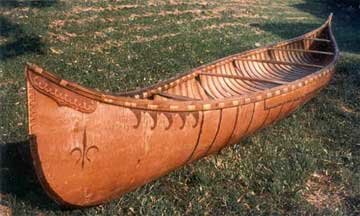
Maliseet Canoe |
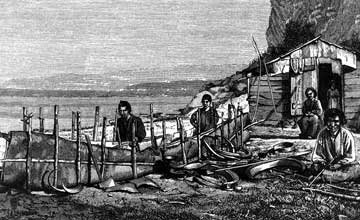
Canoe construction |
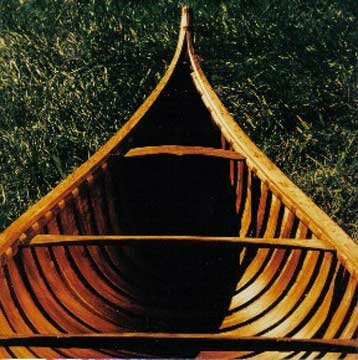
'Ribs' or frame of canoe |
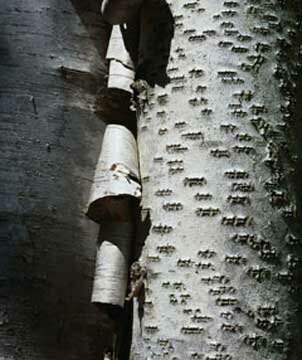
Birch Bark Strips |
| Winter - Land |
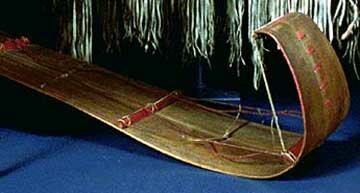
Toboggan |
- In the winter, the majority of travel was done by land. With all the snow in the area, they used snowshoes, sleds, and toboggans to help them traverse the terrain.
- There were two types of snowshoes, depending on the snow conditions and weight of supplies they were carrying.
- To carry heavy loads they used the round bear paw snowshoes. Because they were so wide, they often smashed their ankles. So many preferred the narrow snowshoe, to make it easier to pass between thick bushes and trees.
- To carry back the meat, they used toboggans, which allowed them to carry heavy loads over deep snow.
|
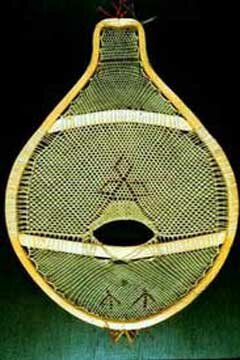
'Bear paw' snowshoes (heavier loads) |
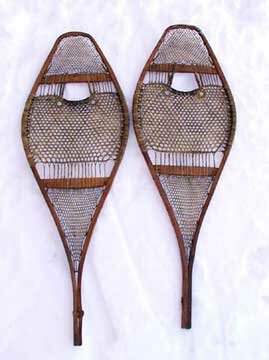
Narrow snowshoes |
|
| Seasonal Migration / Adaptation |
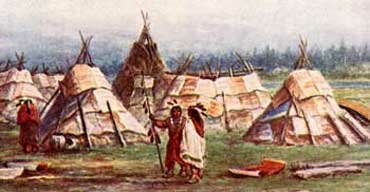 |
- The Eastern Woodlands Algonquians were semi-nomadic people. Since hunting was their main source of food, they lived a lifestyle that was conducive to moving around on a regular basis to follow their food.
- Most Eastern Woodlands Hunters moved into villages during the summer to live with other families and take turns caring for crops (if they were farming). They would stay for the summer when food was abundant, then pick up and move in the fall, in time for the tougher winter months.
|
|
|











