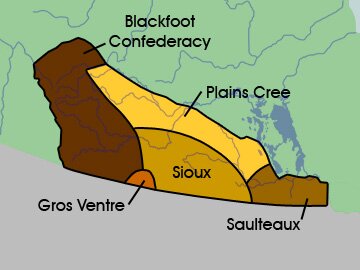
| The Blackfoot Confederacy |
| Peoples |
The Blackfoot Confederacy consisted of the Piegan people (Pikuni), the Blood people (Kainai), the Blackfoot People (Siksika), and the Tsuu T’ina (Sarcee) People. |
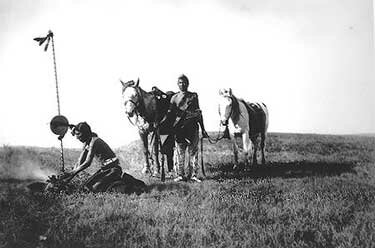
Blackfoot pair on the Plains |
| Location |
They were all located in Alberta except for the South Peigans, and their territory stetched from the North Saskatchewan River along Edmonton down to the Missouri River in Montana, and from the Rocky Mountains to the Saskatchewan River. |
|
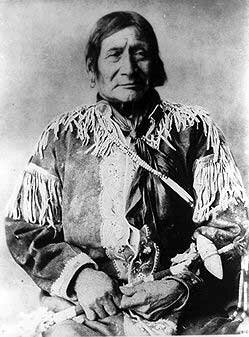
Chief Red Crow |
The Blood (Kainai) |
| Name |
Kainai comes from a-kainaw, meaning "many chiefs”. |
| Location |
Settlement:They settled from the Red Deer River to the Belly River.
Occupation:Occupied hunting grounds from the Red Deer River to the Belly River. |
| Population |
(1700s) about 2500 |
| Reputation |
Were Fierce Warriors; enemies included the Cree, Kootenay, Shoshoni and Crow tribe. |
| Language |
Algongkian |
|
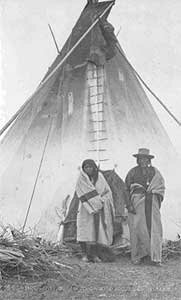
Blackfoot Camp |
The Blackfoot (Siksika) |
| Name |
Siksika means “Blackfoot” and one story suggested a Kainai noticed that the bottoms of a Siksika traveller’s moccasins had been blackened from walking across a charred site of a prairie fire. |
| Location |
Settlement: Lived around the North Saskatchewan River, near Edmonton. |
| Language |
Algongkian |
|
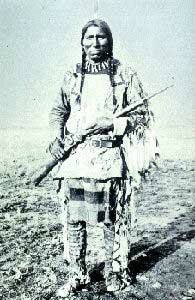
Chief Bull Plume |
The Peigans (Pikuni) |
| Name |
Pikuni comes from apiku'ni, meaning "badly tanned robe." |
| Location |
Settlement: They settledfoothills stretching from Rocky Mountain House, Alberta to Heart Butte, Montana, in the United States of America. |
| Population |
(1700s) 3000-5000
The largest group of the Blackfoot Confederacy, its members are split into two groups: South Peigan and North Peigan. |
| Language |
Algongkian |
|
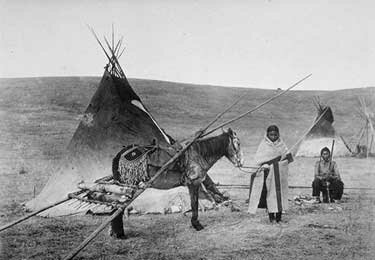
Sarcee Travois |
Tsuu T’ina (Sarcee) |
| Name |
Sarcee derive from Blackfoot word for robustness, Tsúùt'ínà means "many people". |
| Location |
Settlement:They settled in the southwestern limits around what is now Calgary.
According to legend, the Tsuu T’ina tribe is originally from the Northern Boreal Forest. |
| Population |
(1700s) about 2500 |
| Language |
Only Blackfoot tribe to speak Athapascan, like the Dene. |
|
| The Cree |
| Name |
French Explorers called them 'Cristaux', an Ojibwa word meaning 'band south of James Bay,' which soon shortened to 'Cri.' The Cree have many localized names for themselves. |
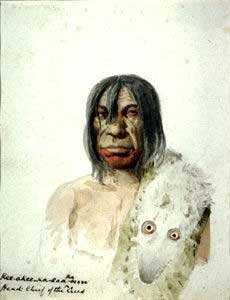
Kee-a-kee-ka-sa-coo-way
"The Man Who Gives the War Whoop" |
| Peoples |
Included the Plains Cree, Woods Cree and Swampy Cree. |
| Location |
Settlement: Plains Cree lived in Alberta and Saskatchewan, Woods Cree in Saskatchewan and Manitoba and Swampy Cree in Manitoba. |
| Population |
(1600s) 30 000 people |
| Language |
Algonquian |
|
| The Sioux |
| Peoples |
The Stoney (Nakoda) and the Assiniboine |
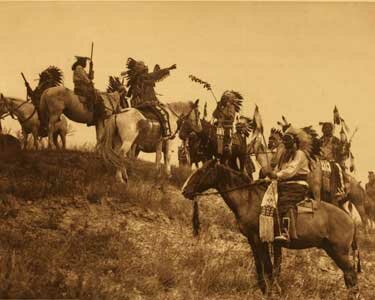
Sioux Raid Party |
| Location |
Alberta, Saskatchewan and Manitoba |
|
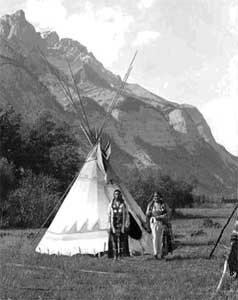
Stoney Tipi |
Stoney (Nakoda) |
| Name |
Also known as the ‘Rocky Mountain Sioux,’ the name Stoney comes from the Nakoda hot stone practice for making broth. |
| Location |
Settlement: Foothills of the Rocky Mountain; forests and foothills rather than Plains.
|
| Language |
Siouan |
|
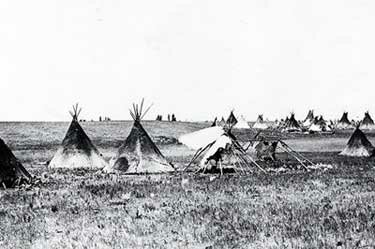
Assiniboine Encampment |
Assiniboine |
| Name |
Assiniboine is derived from an Ojibwa word meaning “the people that cook with hot stones,” referring to the Nakoda practice of taking hot stones and placing them in water to boil the water to make broth. |
| Location |
Settlement: Saskatchewan and Assiniboine river valleys. |
| Population |
(1700s) about 10 000 |
| Language |
Siouan |
|
| Plains Ojibwa (Saulteaux) |
| Name |
Saulteaux means people of the rapids. |
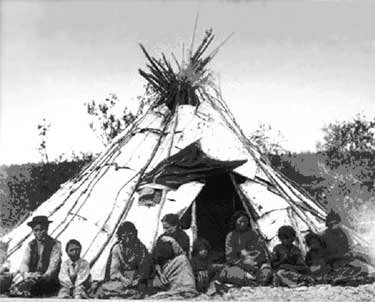
Plains Ojibwa Tipi |
| Location |
Settlement: Originally a native group that lived north of what is now Sault Ste Marie, Ont. Some moved West to Manitoba and Saskatchewan. |
| Language |
Algonquian |
|