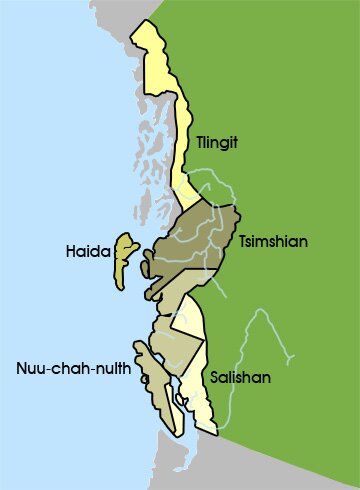
| Haida |
| Name |
The Haida called the islands on which they lived "Haida Gwaii". |
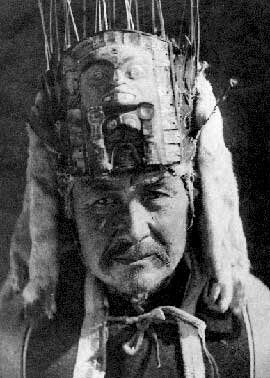
Haida man in a headdress |
| Location |
Queen Charlotte Islands |
| Language |
Haida language - no relation to other language groups |
|
| Tlingit |
| Name |
Their name comes from what they call themselves - "Lingit", meaning "people". |
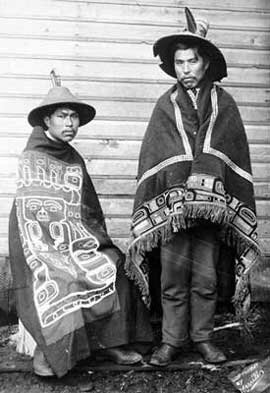
Two Tlingit men in traditional dress |
| Location |
Northwest part of BC, southwest part of the Yukon. |
| Language |
Tlingit language - no relation to other language groups |
|
| Tsimshian |
| Name |
Their name means "People inside the Skeena River". |
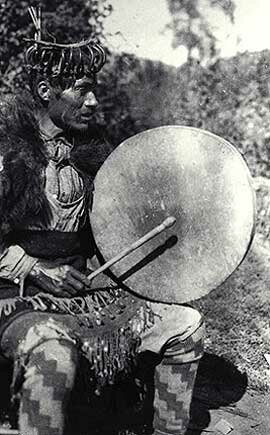
Tsimshian Shaman with drum |
| Location |
Along the Nass and Skeena Rivers |
| Language |
The Tsimshian language family can be broken down further into Nishga (Nisga'a) and Gitksan. |
|
| Nuu-chah-nulth (Nootka) |
| Name |
"Nootka" means "come around" in their native language. When James Cook first encountered them, they told him to "come around" with his ship to the harbour in their language, which he mistakened for their name. "Nuu-chah-nulth" means "all along the mountains", describing the habitat of their people. |
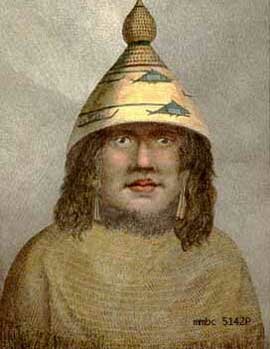
Nuu-chah-nulth woman |
| Location |
West Coast of Vancouver Island |
| Language |
The Nuu-chah-nulth language family can be broken down further into Haisla (Kitamaat), Heiltsuk (Bella Bella), and Kwakwakw'wakw (Kwakiutl) |
|
| Salishan |
| Name |
"Salishan" refers to the language family. There are numerous groups with numerous languages and dialects within the Salishan language family. |
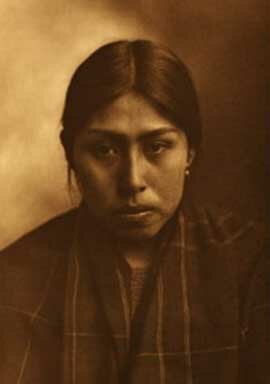
Coast Salish woman |
| Location |
Southwest coast of BC, beside Vancouver Island |
| Language |
The Salishian language family can be broken down further into Nuxalk (Bella Coola) and Coast Salish. |
|